
Free Parent Resource Library
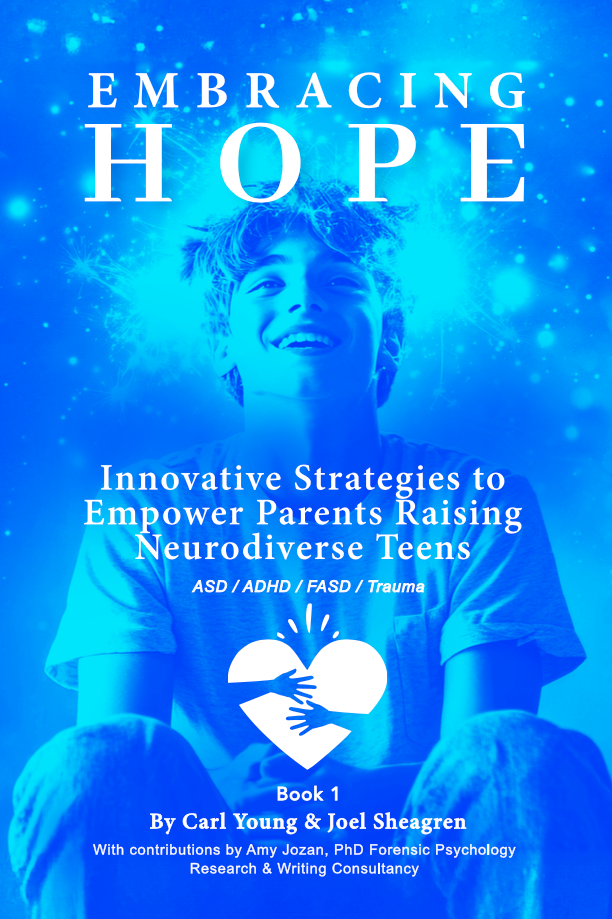
We believe every family raising a neurodiverse child deserves access to tools, strategies, and insights that can truly make a difference — without a paywall. This library gives you free supplemental content for all 20 chapters of Embracing Hope.
- Deeper symptom guides & brain science
- Practical strategies for home and school
- Printable tools, scripts, and frameworks
- New chapters added regularly
- Always free — no credit card needed
Get Instant Free Access
Enter your name and email below. We'll send you occasional updates on new chapters, courses, and resources — and you can unsubscribe at any time.
Welcome to the Parent Resource Library
You now have free access to supplemental content for all 20 chapters of Embracing Hope — deeper guides, brain science, practical tools, and real-life strategies. New chapters are added regularly. Bookmark this page and check back often.
Below you'll find supplemental content organized by chapter — including extended symptom lists, brain science breakdowns, intervention strategies, printable tools, parent scripts, and real-life examples. Content is organized into three sections: Foundational Chapters (the building blocks every parent needs), Core Conversations (deep dives into the specific challenges neurodiverse teens face), and Closing Chapters (putting it all together). Chapters with a Live Now badge are available today — click Read Now to open them.
Foundational Chapters
The essential building blocks — understanding the brain, neurodiversity, and the four profiles that shape this guide.
A guide to navigating Embracing Hope's unique structure — helping you get the most from each chapter and find what your family needs most right now.
A foundational look at neurodevelopment — how the brain shapes behavior, learning, and emotion, and what that means for the child you're raising.
What neurodiversity really means, why it matters, and how embracing it — rather than fixing it — changes everything about how we support our children.
Deep dives into Autism (ASD), ADHD, Fetal Alcohol Spectrum Disorder (FASD), and Trauma — the four profiles at the heart of this guide — with strengths, myths, symptoms, and support strategies.
Why IQ doesn't tell the whole story — and how to build the bridge between what a child understands and what they can consistently do in daily life.
How self-worth develops in neurodiverse children, what low self-esteem really looks like, and practical metacognition tools to help your child build a confident inner voice.
Why many neurodiverse children function younger than their age — and what that means for expectations, discipline, and daily support.
The unwritten social rules most children absorb naturally — and why neurodiverse children often can't, plus tools to make the invisible visible.
Why changes — big and small — can be so disruptive for neurodiverse brains, and proven strategies to smooth the way through every transition.
The stuck-in-a-loop thinking pattern that can derail daily life — understanding why the brain gets stuck and how to gently help it shift gears.
Understanding why neurodiverse children sometimes fill in memory gaps — and why it isn't lying, manipulation, or a character flaw.
Why abstract language, metaphors, sarcasm, and figurative speech can genuinely confuse neurodiverse learners — and how to communicate more concretely.
The often-broken connection between actions and consequences — and why it doesn't compute the way adults expect, especially under stress.
What's happening in the brain when a child acts before thinking — and evidence-based strategies to build self-control without shame.
The skill behind all other skills — how neurodiverse children learn to manage their internal world, and how parents can help build this capacity over time.
When children mask so effectively that they hide their struggles from everyone — including themselves — until they can't anymore.
Why some brains need more time to think, respond, and act — and why slower processing is not the same as low intelligence or lack of effort.
How sensory input affects behavior, regulation, and learning in profound ways — and practical tools to reduce overload at home, school, and in the community.
The three biological foundations of brain function — and why they matter even more for neurodiverse children, with specific, actionable guidance for each.
Closing Chapter
Bringing it all together — how to build environments where neurodiverse individuals are honored, valued, and empowered.
Building a home, school, church, and community culture where neurodiverse individuals are not just tolerated — but genuinely seen, honored, and empowered to contribute their unique gifts.
Key terms, definitions, and a searchable index — making it easy to find what you need, when you need it. The Glossary starts on p. 480, the Index on p. 475.
A comprehensive intervention chart (p. 488) mapping each challenge to practical tools and strategies — a quick-reference guide for parents, teachers, and support professionals.
Ready to Go Deeper?
These resources complement our book — but our online courses give you structured, guided learning with video, tools, community support, and direct access to Carl & Joel's expertise. Courses are coming soon.
"Every child deserves to feel that they are not a problem to be solved — but a person to be supported."— Carl & Joel, Embracing Hope