
Why “High Functioning” and “Low Functioning” Labels Can Hurt More Than Help
Moving Beyond Labels to See What a Child Can Do and Where They Need Support
People often use “high functioning” and “low functioning” as quick shorthand. For many families, though, these labels do more harm than good. They describe how a child looks to us, not what that child needs from us.
Maybe you've heard it in an IEP meeting or a doctor's office. “Good news: he or she is high functioning.” It's meant kindly, and you feel relief for about ten seconds. Then the questions come back. If they are doing so well, why do our evenings fall apart? Why do they hold it together all day at school and come home like a storm?
That's the trap.
What Functioning Labels Actually Measure
Functioning labels usually sort kids by what's visible: speech, test scores, whether they can sit through a class. But looking fine isn't the same as coping. Research has found that IQ is a poor predictor of everyday skills in autistic people. A child might ace a spelling test and still struggle to get dressed, manage a transition, or ask for help.
This has been termed the Cloak of Competency: a child who looks capable on the outside while quietly drowning underneath. The label "high functioning" often becomes the reason support gets denied. "He's fine. She's smart. They just need to try harder."
"Low functioning" does the opposite kind of damage. It lowers expectations and shrinks the dream. It also invites adults to talk about a child in front of them, as if they aren't listening.
They're listening.
Is My Child "High Functioning" or "Low Functioning"?
If you're up at 1 a.m. typing that question into a search bar, here's the honest answer. Your child is not a level on a scale. Your child is a whole person with their own mix of strengths and support needs, and that mix can change with the day, the setting, and the stress load.
A better question is: Where does my child need support, and where do they shine?
What to Say Instead
When you change your language, you change how the people around your child respond. Try these:
Name specific needs. Instead of “low functioning,” say: “She needs visual supports for transitions.”
Name specific strengths. Instead of “high functioning,” say: “He reads above grade level and needs help with emotional regulation.”
Use support language. Clinicians now describe autism by the level of support a person needs. That language points toward action instead of ranking.
Watch the whole day. Notice what happens after school, not just during it. The 4 p.m. meltdown tells you something too.
Ask your child. When you can, let them tell you what's hard and what helps. Dignity starts with being heard.
Why This Matters
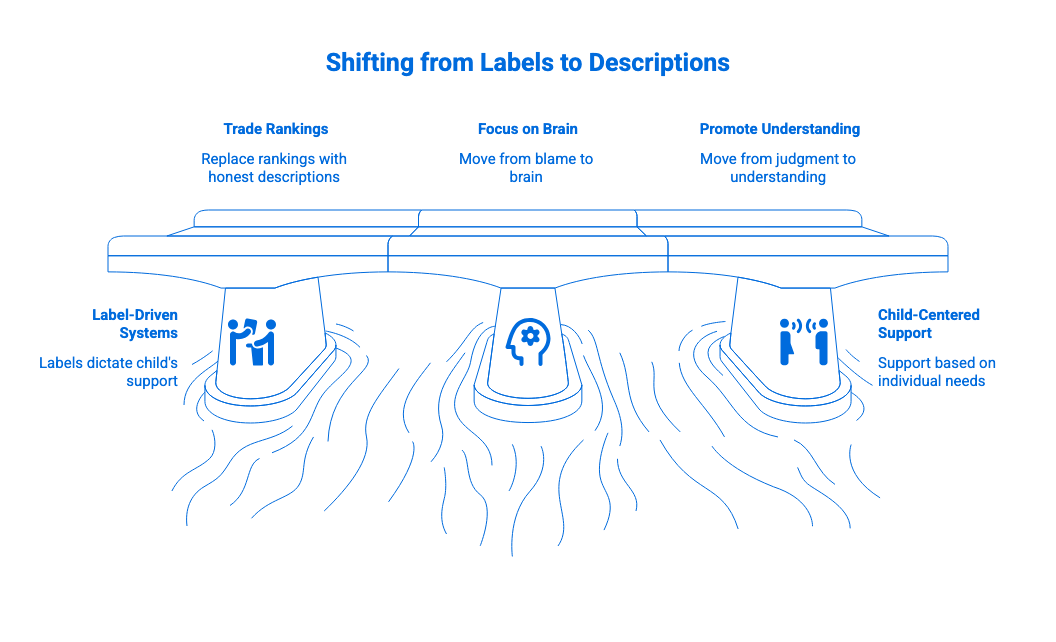
Words shape systems. The label in a file can decide whether a child gets an IEP, a service, or a second look. When we trade rankings for honest descriptions, we move from blame to brain, and from judgment to understanding.
Every child carries a worth and purpose that no score can measure. Beautifully wired. Not high. Not low. Fully human, and made that way on purpose.
Understanding changes everything, and it starts with the words we choose.
